
Indian Rosewood (Dalbergia latifolia) is recognized globally as one of the highest-grade hardwoods, valued for its structural stability, high density, and exceptional aesthetic appeal. Sourced primarily from the Western Ghats across Karnataka, Kerala, and Tamil Nadu, this species grows in mineral-rich forest belts that contribute to its superior mechanical properties. Its natural dimensional stability, high resistance to decay, and excellent workability make it a preferred material for premium furniture, architectural joinery, luxury interiors, and precision woodcraft. As it ages, Rosewood heartwood naturally deepens into a rich, chocolate-brown tone—enhancing both visual value and market desirability.”
Technical Appearance Profile
Genuine Indian Rosewood is frequently misidentified in the Indian market as Sheesham, leading to quality inconsistencies. True Rosewood can be identified by its distinct heartwood and sapwood differentiation:
-
Heartwood: Dark golden brown to deep purple-brown, often with characteristic beetroot-like undertones and contrasting black or dark brown streaks.
-
Sapwood: Pale yellow to creamy white, clearly demarcated from the darker core.
-
Grain & Texture: Straight to interlocked grain with a fine, even texture and natural luster.
-
Density: High-density hardwood, offering superior strength and minimal warping.
-
Aging: Heartwood darkens progressively with age, increasing both its aesthetic depth and commercial value.
Why It Sells
Indian Rosewood’s combination of visual richness, mechanical performance, and long-term stability makes it a high-demand premium timber in both domestic and export markets. Its rarity and slow growth cycle further enhance its exclusivity, making it a preferred choice for customers seeking luxury-grade hardwood with proven durability and lasting value.
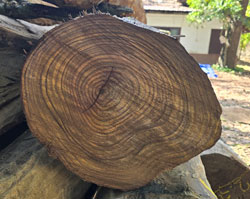
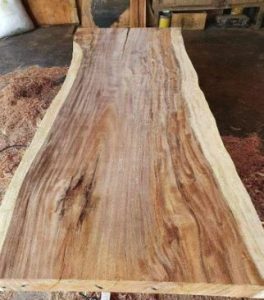
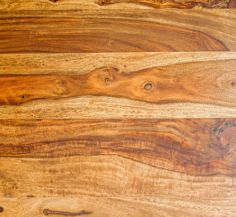
From the above images you’ll notice there is a stark difference in colour of ‘rosewood’ based on its place of growth. Karnataka & Kerala look very similar due to the similarity in region, climate and soil. These rosewoods are the top of the class, which are the true ‘Dalbergia Latifolia’. The difference between Karnataka and Kerala rosewood is that in Karnataka, you can only obtain them from sustainably managed forests from the government as there is no plantation. In Kerala though, there are plantations of rosewood and not necessarily managed sustainably as part of agroforestry in the state.
Central & Northeastern Indian ‘rosewood’ are much lighter in colour with similar wavy grains, this is ‘Dalbbergia Sisoo’ (hence why the common name ‘Sisuu’ or ‘Seesum’ or ‘Sheeshum’. Grains and streaks are interlocked, which means the milled log and processed cut size (or plank) would not have straight streaks, it will be wavy and smooth, which looks lustrous on surface and gorgeous when polished. Glossy finish is most preferred and even engravements or carvings to further enhance luxury and beauty.
Here’s a quick comparison
| Feature | Karnataka Rosewood (Western Ghats) | Kerala Rosewood | Central/Eastern India | Imported Rosewood |
|---|---|---|---|---|
| Scientific Name | Dalbergia Latifolia | Dalbergia Latifolia | Dalbergia Sisoo | Varies |
| Colour | Deep purplish-brown | Reddish to purplish-black | Light to medium brown | Reddish, dark brown, or black |
| Grain | Fine, interlocked | Deep, glossy | Straight, less figured | Varies: dramatic in Brazilian |
| Density | Very high | High | Moderate | High (varies by species) |
| Workability | Excellent | Excellent | High | Varies |
| Regions | Coorg, Chickmagalur, Shimoga | Wayanad, Idukki, Nilambur | Maharashtra, MP, Chattisgarh, Odisha, Bihar, Jharkhand | Brazil, Northern Africa |
| Sustainability | High & Regulated | Artisan-led (with agroforestry) | Medium-Low (Plantation forestry) | Regulated, often controversial |
| Application | Luxury furniture, instruments | Carvings, heritage decor | Utility furniture | Guitars, veneers, luxury interiors |
Processing Rosewood & Yield
Processing rosewood is a labour-intensive and low-yield operation, involves meticulous and resource-intensive workflow due to its density, grain structure, and legal restrictions.
The process begins with selective harvesting from government-managed forests or private plantations, where mature trees—often aged between 60 to 80 years—are legally felled under strict permits. Once harvested, the logs are debarked, sized, and inspected for quality. Seasoning is a critical step, as fresh logs contain 35–45% moisture; they are either air-dried over several months or kiln-dried to reduce moisture to 8–12%, preventing warping and cracking. Sawing and milling follow, but only about 40% of the log yields usable timber due to thick sapwood and natural defects like knots and spiral grain. The remaining 60% is considered waste, though some offcuts are repurposed for smaller items or fuel. The usable timber is then planed, sanded, and polished to reveal its natural sheen, often without the need for staining due to its inherent beauty.
Despite its excellent workability and resistance to decay, rosewood’s hardness demands specialized tools, and its interlocked grain can pose challenges during machining.
Cost & Marketing Value
Rosewood is among the most expensive timbers in India. Its price is influenced by:
- • Place of origin
- • Grain quality
- • Colour
- • Log size and maturity
- • log volume and yield
- • Calcium contents
- • Demand and auction dynamics
Prices Range from ₹6,500 to ₹15,000 per cubic foot for premium-grade rosewood. Lower grades or smaller logs may start around ₹4,500 per cubic foot This pricing reflects not just the wood’s quality, but also the cost of legal procurement, seasoning, and transportation from remote forest areas.
| Indian Rosewood (Western Ghats/Karnataka) | Kerala Rosewood | Central/Eastern Rosewood | Imported Rosewood |
|---|---|---|---|
| ₹6,500 to ₹15,000* | ₹5000 to ₹10,000* | ₹3000 to ₹6000* | ₹4,500 to ₹7,000* |
*Price range for a guide only. Does not represent actual pricing. Relevant and valid for 2025.
Durability & Logevity of Rosewood
With proper care, rosewood pieces can last anywhere from 50 to over 100 years, making them ideal for heirloom-quality furnishings. This longevity is largely due to the wood’s dense structure, which resists wear, warping, and cracking over time. Its natural oils offer built-in protection against termites, fungal decay, and moisture, reducing the need for chemical treatments or frequent maintenance. Aesthetically, rosewood ages gracefully, with its rich purplish-brown tones deepening over time to a warm, chocolate hue. This natural evolution enhances its beauty, making older pieces even more desirable. The wood’s fine grain and smooth texture also allow for excellent finishing, often requiring minimal polishing to maintain its lustre.
Craftsmanship plays a key role in its longevity. Rosewood furniture is typically handcrafted with strong joinery and attention to detail, ensuring structural integrity for decades. Maintenance is simple—regular dusting and occasional polishing are usually sufficient. Avoiding prolonged exposure to direct sunlight and excessive humidity helps preserve its finish and prevent surface damage.
| Karnataka htdRosewood | Kerala Rosewood | Central India Rosewood | Other parts of north (eastern) India |
|---|---|---|---|
 |
 |
 |
 |